Research Overview
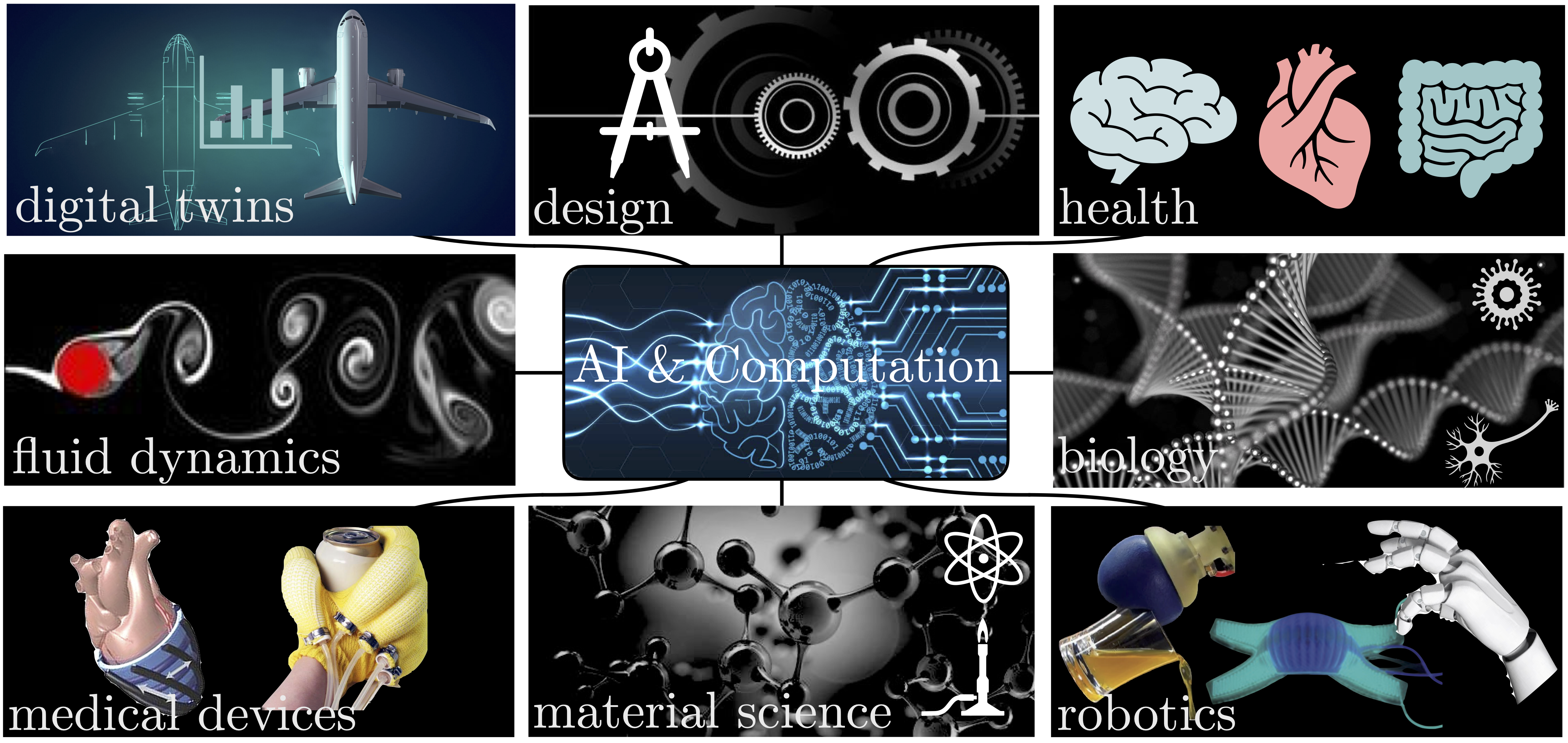
AI-Empowered Engineering Problem-Solving: The overarching vision of my research centers on translation of computational mechanics and artificial intelligence into modern engineering problem-solving and effective decision-making across a wide range of applications, including: health and bioscience, engineering design, material sciences, digital twins, etc.
Learning-Based Modeling and Design
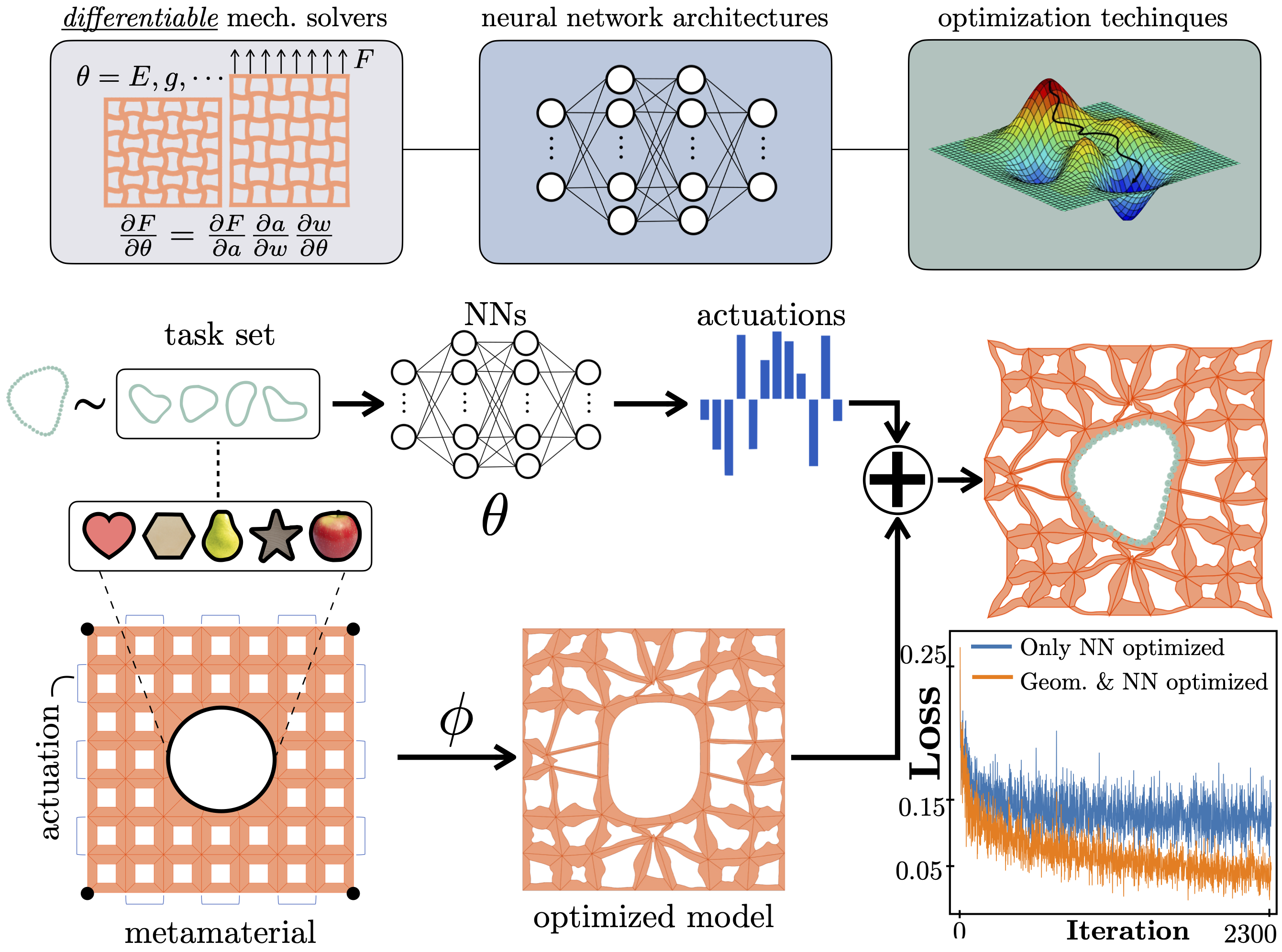
This multidisciplinary research introduces novel learning-based modeling paradigms integrating end-to-end differentiable computational solid/fluid mechanics approaches, machine learning architectures, and optimization techniques to facilitate and automate the design of subject-specific mechanical systems with complex and nontrivial functionalities. For example, we proposed a machine learning framework (shown in this figure), to design intelligent soft materials, inspired by biological systems known as mechanical intelligence whereby biological systems co-evolve their body and cognitive control system to efficiently perform their daily tasks. Other application examples include designing multifunctional cellular solid metamaterials with exotic mechanical behavior for (biomedical) soft robots.
selected publications
- Designing Mechanical Meta-Materials by Learning Equivariant Flows
- A Rapid and Automated Computational Approach to the Design of Multistable Soft Actuators
- Neuromechanical Autoencoders: Learning to Couple Elastic and Neural Network Nonlinearity
Cardiovascular Mechanics Digital Twins Modeling
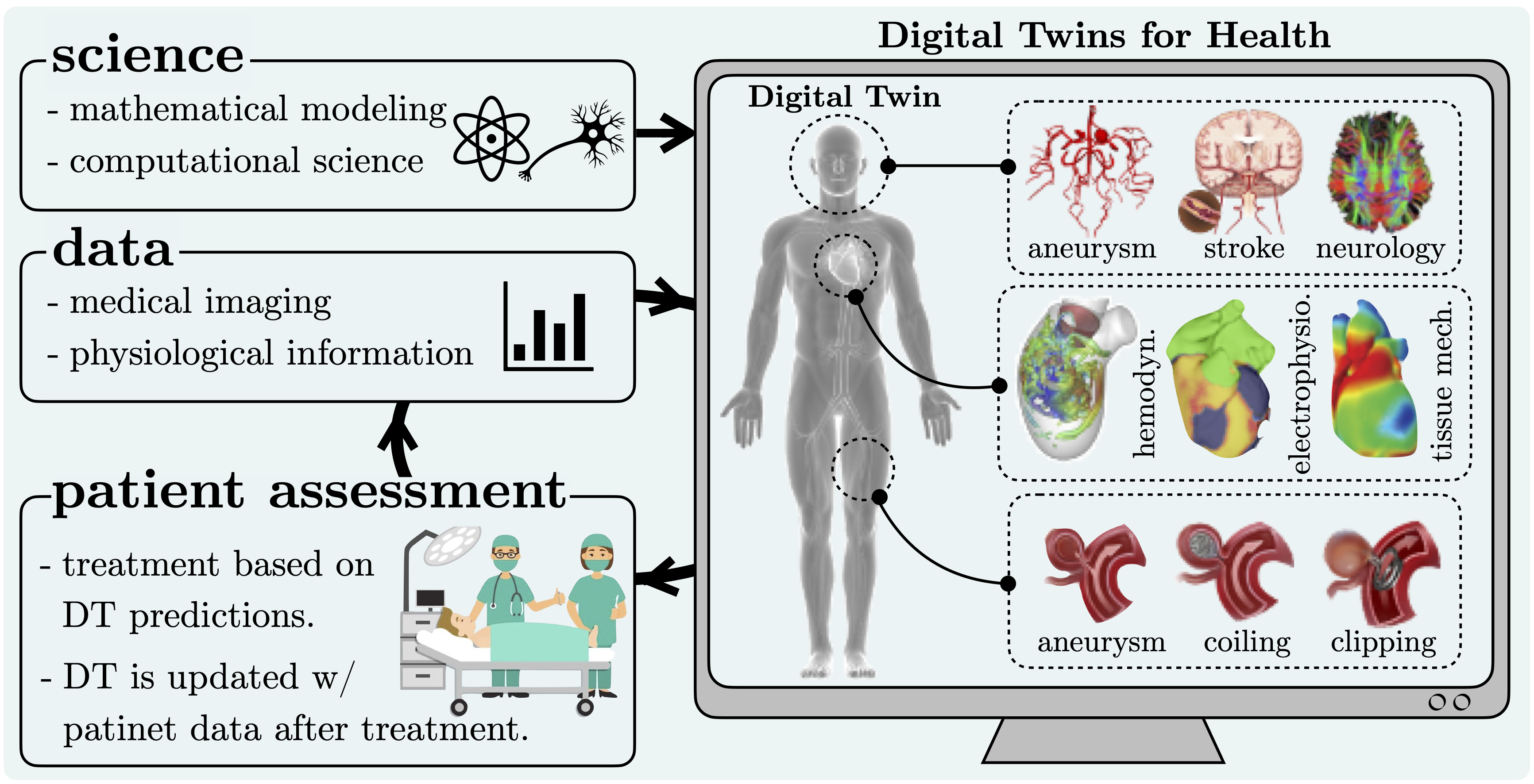
Cardiovascular mechanics simulations can uncover functional indicators of cardiovascular diseases—the leading cause of death worldwide. This research enables development of cardiovascular digital twins—virtual model of a physical/biological system continually updating with real data—through combining data-driven and physics-based reduced-order models for timely, noninvasive, and in situ personalized healthcare decision-making and treatment planning.
selected publications
- Distributed Lumped Parameter Modeling of Blood Flow in Compliant Vessels
- Reduced Order Models for Transstenotic Pressure Drop in the Coronary Arteries
- Platelet Packing Density Is an Independent Regulator of the Hemostatic Response to Injury